
The Uncomfortable Case for Small Living: Why We Struggle to Live With Enough
We don’t resist small living because it’s impractical — we resist it because it questions our definition of success.

Did you know that you can Like and Comment on this newsletter? Simply click the link below to connect with my community on the Substack app. I’d be grateful to have you join the coversation. It’s FREE to use and no annoying ads!


Growth for the sake of growth is the ideology of the cancer cell. ~Edward Abbey
Have you ever wondered how much is “enough” to make you truly happy??
Settling on a reliable answer requires us to define exactly what enough means. The Merriam-Webster dictionary says that enough is something occurring in such quantity, quality, or scope as to fully meet demands, needs, or expectations
Obviously, this differs from person to person and changes over time. As individuals, we come from diverse backgrounds and bring a wide range of worldviews to the table.
When we’re young and raising a family, we need more space and financial resources. Once our children are grown, we typically need less.
But there are exceptions to every rule. Some folks wouldn’t dream of giving up their big houses for a smaller one, while others are eager to downsize and declutter their lives.
The following list explains the reasons people choose to decrease their lifestyle:
Financial Benefits: Smaller homes are generally more affordable to purchase or rent, resulting in lower mortgage payments, property taxes, and utility bills.
Minimalism & Simplicity: Limited space forces intentional consumption, reducing clutter and allowing people to focus on experiences rather than possessions.
Less Maintenance & Cleaning: Smaller spaces require less time for chores, repairs, and upkeep, freeing up time for hobbies and leisure.
Flexibility & Freedom: Tiny homes, in particular, offer mobility, while smaller apartments are often located closer to urban amenities, reducing commute times.
Cozy & Intimate Atmosphere: Many find that smaller spaces feel more comfortable, intimate, and secure compared to larger, impersonal homes.
Environmental Impact: Smaller homes typically consume less energy and resources, reducing the overall carbon footprint.
Of these reasons, the main driver is financial, while environmental factors and the others are secondary.
The case for small living isn’t inspiring, as it challenges societal standards of success.
And that’s why it’s an argument most people don’t want to hear.
From an environmental perspective, size matters more than efficiency. A larger, energy-efficient house still uses more resources than a smaller, less-optimized one.
Small living requires the downscaling of our expectations and, for some, that’s a hard pill to swallow. It requires us to admit that many of our environmental harms aren’t accidental but the direct result of lifestyles designed around abundance.
Space has become our favorite form of insurance.
However, the more space we have, the more it costs to sustain it.
What makes this case unpopular is that it doesn’t applaud us as savvy, ethical consumers. It frames us as willing participants in a physical world with limits, and those restrictions are hard to sell in a culture that equates growth with progress.
This logic applies to our many possessions. We tend to think about an object's environmental impact only when we dispose of it. Garbage or recycle?
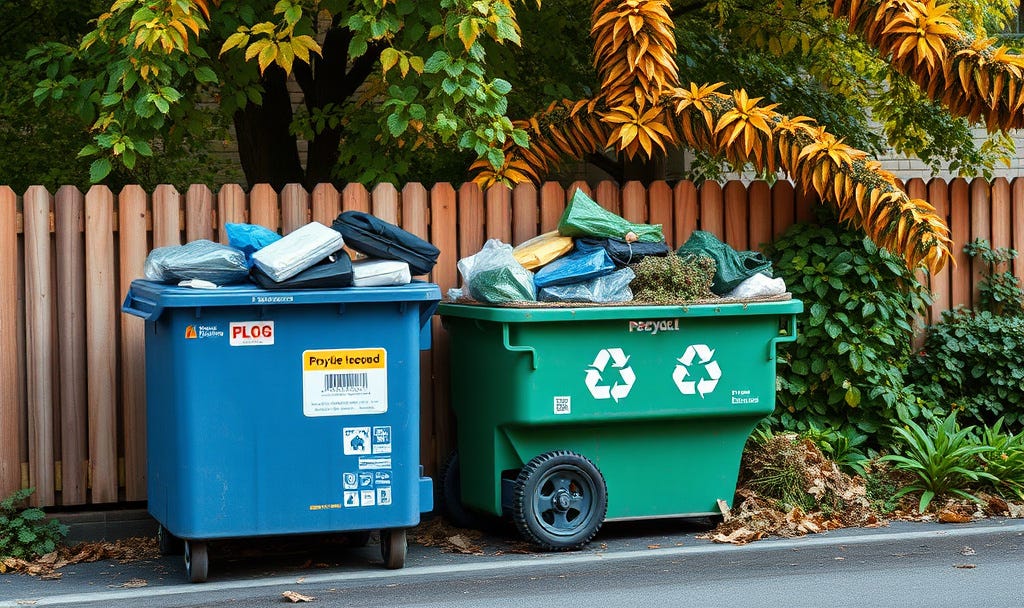
The reality is that the impact begins with its extraction, manufacturing, shipping, storage, and eventual replacement.
We may describe decluttering as self-care, but the inconvenient truth is that the most sustainable object is the one that was never produced.
Reducing demand at the source is the only way to stop the emissions that cause climate change and the resulting damage. Living smaller does just that.
However, we’ve been convinced that abundance equals success and freedom. The reduction from small living (which people see as a loss) suggests the opposite: resilience comes from the ability to adapt rather than accumulate.
Smaller lifestyles are more flexible and require fewer resources to function and recover when systems fail. Density is another unpopular word that enables an efficient approach that no individual upgrade can match.
Shared infrastructure and resources dramatically reduce the per-person impact, but they demand proximity, compromise, and interdependence; qualities our culture has spent decades unlearning.
As a society, we believe that technology is at fault for environmental destruction. We don’t want to hear that it’s also the sheer volume of space, stuff, and energy that's a major contributor to the problem.
Clean energy and better materials are vitally important, but without addressing scale, any gains are quickly lost.
Efficiency without restraint is how we ended up here.
There’s also an equity issue at play.
High-consumption lifestyles are disproportionately concentrated among wealthier populations, while the environmental consequences are felt by everyone.
When people of affluence refuse to downsize their comforts, they do so at the expense of others. In this way, small living isn’t only ecologically smart but also ethical.
However, living smaller has its challenges. Cultural shifts are needed before systems can catch up. Current housing markets, zoning laws, and economic precarity make downsizing more difficult. We must normalize smaller expectations before structural changes occur.
The environmental case for living small addresses the problem correctly by acknowledging physical limits rather than engineering around them. We’re effectively asked to accept that maturity, not innovation alone, is required.
And that restraint shouldn’t be viewed as a regression, since living well may ultimately be the same as living small.

If this piece resonated with you, and circumstances permit, Paid Subscriptions and Tips help sustain my work and keep it ad-free.
Whether it’s Likes, Shares, Comments, or financial support, your encouragement is always appreciated!
Thank you for reading,

I don’t think most of us struggle with “enough” because we’re shallow or greedy. We’ve been taught to measure our worth by accumulation, so it's no wonder we identify that with success. I’d love to hear what “enough” means to you personally.